Blockbuster: Arcade
- 4.6
- Rating
- 1.00M
- Installs
- Free
- Price

 Analysis by App-foxy
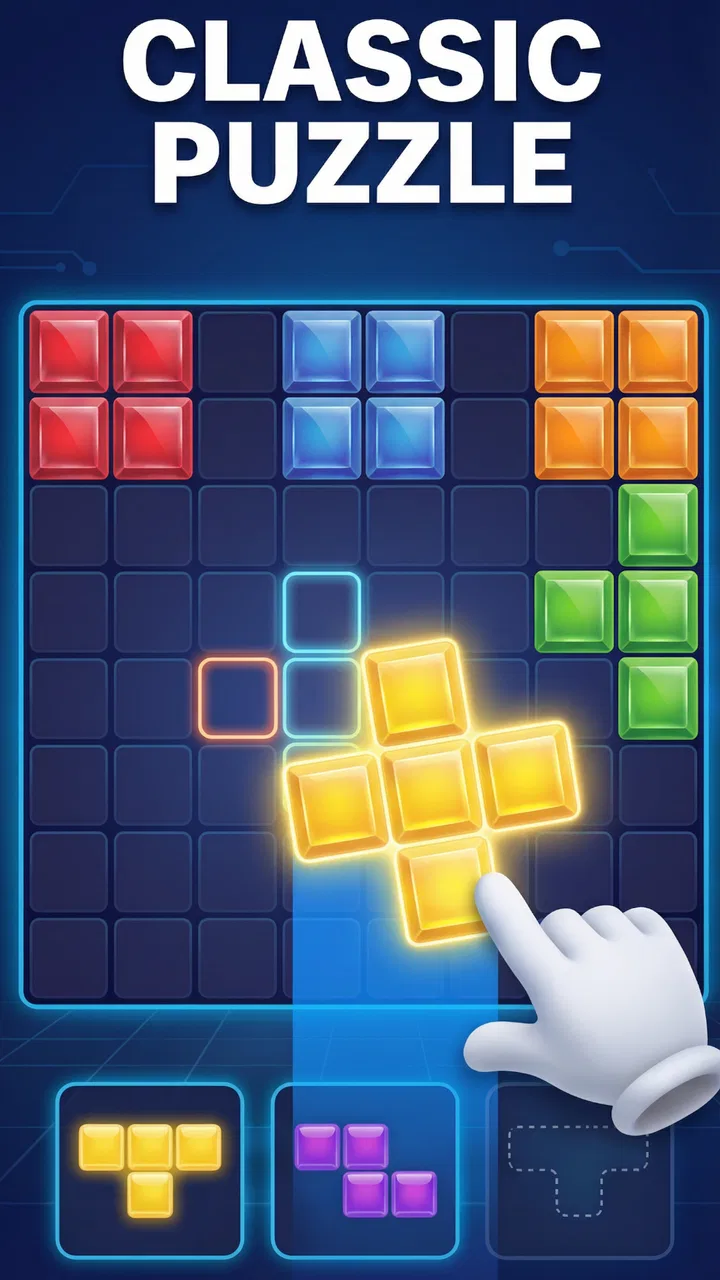
Blockbuster: Arcade is the kind of puzzle game I reach for when I want something familiar, quick to understand, and easy to pause. It comes from Gimica GmbH and sits in the casual puzzle space, built around clearing blocks rather than asking me to learn a complicated story or a large set of controls. That simplicity is its main appeal: I can start playing almost immediately, make a few moves during a short break, or stay longer when I want a more relaxed session.
My overall impression is positive, but I would not describe it as a universal choice for every puzzle fan. It works best for people who enjoy the rhythm of arranging and removing blocks and who prefer a low-pressure game over a demanding brain teaser. If you want deep planning, a strong narrative, or a highly competitive challenge, another type of puzzle game may suit you better. The useful question is not whether this is a good game in isolation, but whether its particular kind of repetition matches the way you like to play.
What to consider before choosing it
I judge a block puzzle by four things: how quickly it becomes understandable, whether the basic action stays satisfying after the first few rounds, how well it fits short sessions, and how much friction appears around the play itself. Blockbuster: Arcade does well on the first and third points. The idea is immediately approachable, and the format makes sense for waiting rooms, commutes, pauses between tasks, or a few quiet minutes before bed.
You May Also Like

 Blood Strike: 2.5 Anniversary
Blood Strike’s Loadouts Turn Every Drop Into a Tactical Gamble
A close look at Blood Strike’s custom loadouts: how fast access to signature weapons reshapes its battle royale rhythm, rewards preparation, and narrows the gap between fights.

 Pandora - Music & Podcasts
Pandora’s Music Is Easy to Start, but Harder to Recover
Pandora’s strength is its low-effort path from a seed to a station. Its weak spot is how much confidence it asks you to place in connection, setup, and quiet recovery.

 8 Ball Pool
 Is Built on Rivalries, Rematches, and Routine
A close look at the rivalries, rematches, shared routines, and unanswered safety questions that turn a quick pool match into a persistent mobile community.

 Samsung Music
’s Quiet Strength Is Playing What You Already Own
Its reach comes less from spectacle than from dependable access to a personal library. That simplicity is both the app’s strongest retention engine and its ceiling.

 AccuWeather: Weather Radar
AccuWeather Review: A Quick, Clear Forecast for Everyday Decisions
For everyday plans, the best forecast is the one you can understand quickly. AccuWeather makes rain timing, radar, and local conditions easy to act on, with a few trade-offs.

 Hill Climb Racing
Why Hill Climb Racing Still Turns Crashes Into One More Run
A tiny car, a bumpy hill and one more upgrade: Hill Climb Racing keeps resurfacing because its simple chaos makes every near-miss feel personal.
More From Our News Desk



The more important test is whether clearing blocks remains enjoyable once the novelty fades. In my experience, this game is strongest when I treat it as a small routine rather than a one-time challenge. The pleasure comes from spotting a useful placement, keeping the board manageable, and deciding whether to make a safe move now or hold out for a better arrangement. That is a modest form of strategy, but it gives the simple format enough thought to prevent it from feeling completely automatic.
It is also worth considering your tolerance for repetition. A block-busting puzzle naturally relies on a repeated loop, so the game does not offer the same variety as a puzzle adventure with changing environments or a story-led title with new characters. I found that the experience is most comfortable when I want consistency. It is less convincing as my only puzzle game, especially if I am looking for constant surprises.
The practical entry point is friendly. It is free to download, suitable for Everyone, and runs on Android devices using version 7.0 or later. The current version is 1.7.0, which makes it a straightforward option for many people with older phones as well as newer devices. I would still check the way the game feels on your own screen before committing to long sessions, because block placement depends on comfortable visual spacing and responsive touch input.
Its public reception gives some useful context without replacing personal preference. Blockbuster: Arcade holds a 4.5 average from around 34 thousand ratings and has passed 1 million installs. Those figures suggest that the basic concept connects with a broad casual audience, but they do not tell me whether someone who prefers complex logic puzzles will enjoy it. A popular pick can still be the wrong fit if its pace and structure do not match your habits.
Why the simple format works
The best part of the design is that it leaves room for a particular kind of concentration. I do not need to remember a long rule set while playing. My attention can stay on the current arrangement and the consequences of the next placement. That makes it useful when I want a mental reset rather than a full gaming commitment.
I also like the way this sort of game creates small decisions instead of one huge problem. A move may look harmless, but placing a piece in the wrong area can make the next few turns awkward. This gives the game a gentle planning layer. It is not the same as solving a carefully constructed logic grid, yet it rewards players who pause for a moment instead of tapping through every move without looking ahead.
For me, the strongest use case is a short break where I want something more engaging than scrolling but less demanding than a competitive match. I can play a little, stop when my break ends, and return later without needing to reconstruct a complicated plot. That low commitment is a real advantage over games that expect a longer uninterrupted session.
Small habits that improve the experience
My first practical tip is to avoid treating every open space as equally valuable. A board that looks tidy now can become difficult if I fill the most flexible area too early. I try to preserve room for awkward shapes and keep my placements balanced rather than building a crowded corner. That habit makes the game feel more deliberate and reduces the number of turns where I am simply reacting to a poor earlier choice.
A second useful approach is to play in short, intentional windows instead of chasing an endless session. The game’s relaxed structure makes it tempting to continue automatically, but stopping after a satisfying run helps preserve the sense that I am choosing to play rather than letting the loop choose for me. This is especially helpful for people who install casual games as a way to unwind but do not want another source of passive screen time.
Third, I would use it as a transition activity. A few rounds can work between two demanding tasks because the rules are light enough to understand immediately. I would not use it during a situation that requires full attention, of course, but as a deliberate pause it can help separate work, study, or household tasks. The value is not just entertainment; it is the ability to enter and leave the experience with very little mental overhead.
Finally, I recommend paying attention to your own reaction to near-misses. If a difficult board makes you curious about improving your next attempt, the loop is probably working for you. If it mainly produces irritation because the same type of decision keeps returning, that is a sign to switch to a puzzle with more variety or a clearer progression structure. The game is at its best when its repetition feels calming rather than restrictive.
Where it wins, and where another puzzle may fit better
I find this game’s clearest strength is how little effort it takes to get started: its block-focused puzzle loop fits spare moments without asking me to track a story or compete. That convenience can make it a useful regular pick, but it is not the same as lasting variety. I weigh whether its repeatable decisions stay enjoyable against what a more varied puzzle can offer, then consider how easily it fits into a routine.
The advantages of a focused block puzzle
Compared with story-driven puzzle games, Blockbuster: Arcade is easier to enter and easier to leave. There is no need to remember where I am in a narrative or wait for a particular chapter to make progress feel worthwhile. That makes it a better match for fragmented time. Someone who plays in brief bursts may get more practical value from this format than from a richer game that rewards long sessions.
It also has an advantage over many word or trivia puzzles for players who want to play without relying on a particular subject area. The challenge comes from spatial choices and timing rather than vocabulary, general knowledge, or a specific theme. That can make it more welcoming when I am tired and do not want the game to test what I know.
Against highly competitive puzzle games, its strength is the calmer pace. I can focus on my own decisions rather than comparing every move with another player. For a player who wants a quiet solo activity, that is a meaningful difference. On the other hand, anyone who needs leaderboards, direct competition, or a strong social layer may find the experience too inward-looking.
The game’s broad age rating also makes it easier to consider for a mixed household. I would still choose games based on the individual player’s preferences, but the Everyone classification supports its role as an accessible casual option. It does not require the kind of mature theme or specialized knowledge that would narrow its audience.
When I would choose something else
I would skip this game if my main goal were a puzzle with a carefully authored solution. Block placement offers decisions, but it is not the same experience as solving a fixed mystery, navigating a logic sequence, or discovering a story through environmental clues. Those alternatives are better when I want each stage to feel distinct and handcrafted.
I would also look elsewhere if I needed a strong sense of long-term progression. A simple arcade puzzle can provide personal improvement, but that is different from a game built around characters, unlockable worlds, or a campaign. If visible advancement is what keeps me motivated, I would choose a title designed around that structure rather than expecting this one to provide it.
Players who dislike repeating a familiar loop should be especially cautious. The clean concept is also the source of the limitation: once I understand the basic rhythm, the experience depends on whether I enjoy refining decisions within that rhythm. There is no point pretending that a focused format offers the variety of a larger puzzle collection. Its restraint is either a benefit or a drawback depending on what I want from my next game.
Another consideration is spending. The game is free, but optional in-app purchases range from $0.99 to $4.49 per item. I see that as a reason to decide in advance whether I am comfortable with optional purchases, particularly if I tend to spend impulsively during a frustrating run. The free entry makes trying it easy, but “free to start” is not the same as “a game with no possible spending decisions.” I prefer to approach it with a clear personal limit.
What switching from another puzzle feels like
The cost of switching into Blockbuster: Arcade is low if I am coming from another casual block game. The controls and objective are familiar enough that I can begin without a tutorial-heavy adjustment period. The bigger change is emotional rather than mechanical: I need to accept that the game is about maintaining a satisfying flow, not necessarily delivering a new twist every few minutes.
Switching away is just as easy for the same reason. If I decide that I need more depth, I can move to a logic, word, match, or narrative puzzle without having to unlearn a complicated system. I do not feel pressured to make it my permanent puzzle home. That flexibility is one of its quiet strengths: it can occupy a specific place in my app library without needing to replace every other game I enjoy.
For someone comparing alternatives, I would make the choice by session type. Choose this one when you want a quick, spatial, solo activity with a familiar loop. Choose a story puzzle when you want discovery. Choose a logic-focused game when you want carefully defined problems. Choose a competitive title when performance against other players is the main motivation. Those categories overlap, but they do not satisfy the same need.
The developer, Gimica GmbH, has positioned the game around a broad and approachable puzzle idea rather than a niche specialist audience. That makes sense for its role as a casual download, but it also means experienced puzzle players should keep their expectations measured. I found more value in its convenience and repeatability than in any promise of deep transformation into a different kind of game.
My recommendation for different players
I recommend Blockbuster: Arcade to anyone who wants a free block puzzle for brief breaks, especially if they enjoy making small spatial decisions and prefer a relaxed solo rhythm. It is a sensible choice for a first download in this category because the premise is easy to grasp, the age rating is broad, and the Android requirement reaches back to version 7.0. The game’s 1.2 thousand reviews add further evidence that it has attracted active attention, although I would still judge it by how much I enjoy the loop myself.
I would recommend it less strongly to players who need a campaign, a competitive community, or a steady stream of new mechanics. Those players may be happier with a more specialized alternative, even if that means giving up some of the convenience found here. I would also avoid presenting it as a substitute for serious logic training. It can encourage planning and visual attention, but its main purpose is casual play.
My own decision rule is simple: install it if you want a puzzle you can understand in a minute and revisit without preparation. Give it a fair trial across both a short break and a longer relaxed session. If the act of keeping the board open and finding the next useful placement feels satisfying, it has earned a place on your phone. If the repetition becomes noticeable before the enjoyment settles in, move on without feeling that you missed the point.
My final recommendation is to treat Blockbuster: Arcade as a dependable casual tool, not an all-purpose puzzle masterpiece. Its free starting point, approachable block play, and low commitment make it easy to recommend to the right person. I like it most when I want a calm mental pause with just enough planning to keep my attention active. I would choose something else for richer progression or more demanding variety, but for quick, repeatable puzzle sessions, Blockbuster: Arcade is a worthwhile option to try.
FAQs for Blockbuster: Arcade
01What is Blockbuster: Arcade?
Blockbuster: Arcade is an immersive mobile game that combines classic arcade elements with modern gameplay mechanics. Players can enjoy a variety of mini-games and challenges, each designed to test different skills. The game features vibrant graphics and an engaging soundtrack, making it a nostalgic yet fresh experience for fans of arcade games.
02Is Blockbuster: Arcade free to play?
Yes, Blockbuster: Arcade is free to download and play on both Android and iOS platforms. However, like many mobile games, it offers in-app purchases that can enhance the gaming experience. These purchases are optional and not necessary to enjoy the core features of the game.
03What are the system requirements for Blockbuster: Arcade?
For Android devices, Blockbuster: Arcade requires version 5.0 (Lollipop) or higher, while iOS users need to have iOS 10.0 or later. The game is optimized for both smartphones and tablets, ensuring smooth gameplay across different devices. Users should ensure they have sufficient storage space for download and updates.
04Does Blockbuster: Arcade require an internet connection?
Blockbuster: Arcade can be played offline, which is great for users who want to enjoy the game without an internet connection. However, certain features, such as leaderboards and special events, may require online access. Connecting to the internet enhances the overall experience, but is not mandatory for basic gameplay.
05How does Blockbuster: Arcade handle user data and privacy?
Blockbuster: Arcade takes user privacy seriously. The app collects minimal data necessary for gameplay and performance improvements. Users have control over data sharing and can adjust privacy settings at any time. The game complies with major data protection regulations, ensuring a secure gaming environment for all players.
Pros
- Engaging and dynamic gameplay.
- Vibrant and colorful graphics.
- Easy to learn controls.
- Regular updates with new levels.
- Multiplayer mode available.
Cons
- Contains in-app purchases.
- Requires internet connection.
- Ads can be intrusive at times.
- Limited offline content.
- High battery consumption.

Blockbuster: Arcade
Gallery